

Introduction: A City That Has Always Stood Apart
To most, Barcelona is what it is today-one of the most exciting and heavily touristed cities in Europe, lauded for its stunning architecture, cultural vibrance and relaxed Mediterranean atmosphere. Yet, the international fame and appeal of Barcelona is only a very recent phenomenon historically. An interesting early 20th century account written by National Geographic provides a rare glimpse of Barcelona many years before mass tourism altered it into the cosmopolitan city it is now. Here we see the history-filled, deeply Catalan city in its state of constant, yet individualistic development.
A compelling fact about Barcelona is its long history and sense of continuity, far beyond that of a popular, contemporary tourist destination and architectural wonder; for centuries it has stood as a busy Mediterranean port city, trade hub and stronghold of Catalan culture and identity.
A Strong Catalan Identity That Defines the City
The very character of Barcelona cannot be dissevered from that of Catalonia in which it is situated; even in early historical descriptions, visitors noted that Barcelona retained its own strong identity apart from that of Spain. Catalan was the everyday spoken language and the customs and traditions affected public and private life throughout the centuries in an individualistic way.
This sense of individuality is by no means a new political statement; rather, it is something which developed over a period of hundreds of years. Catalans established their own laws, governing systems, and commercial interests throughout the Middle Ages when Barcelona rose to prominence as one of the chief maritime cities of the Mediterranean. Along with Italy, France, and the rest of the Mediterranean region including north Africa, the strong mercantile and cosmopolitan feel of the city was consolidated through trade.
In the beginning of the twentieth century, the date of the National Geographic article, Barcelona already possessed a strong sense of individuality that affected the city’s politics, economy and character.
From Medieval Trade Hub to Industrial Powerhouse
Barcelona has been an important European city for a long time, since long before the industrial revolution. In the Middle Ages it grew to become an important maritime commercial city along the Mediterranean coast. The Catalan merchants extended trade links to every corner of Europe and North Africa and this enabled Barcelona to grow in wealth, power and political importance. The city’s port became increasingly central in its growth. Goods from textiles to foodstuffs to manufactured items passed through Barcelona and made it part of a growing network of regional and international commerce. This led in turn to the growth of an urban bourgeoisie that channeled significant investment into trade, infrastructure and culture. By the 19 th century Barcelona had reached another new stage of growth and development based on industrialization. It developed into Spain’s largest industrial city, in particular it specialized in textiles. This led to the proliferation of factories, the construction of railways and the modernization of infrastructure, which in turn generated rapid population growth by attracting people from all parts of Spain. It was also during this period that Barcelona continued to place emphasis on its urban design and aesthetics, rather than focusing solely on industrial growth (as in many other European cities of this era) and this, combined with its industrial power, created its unique character.
Architectural Innovation That Defined a city
Among the most recognizable and enduring of Barcelona’s contributions to world culture is its architecture. From early accounts in the twentieth century, Barcelona already struck travelers with its distinct architectural profile where medieval design meshed with an emphasis on modern invention.
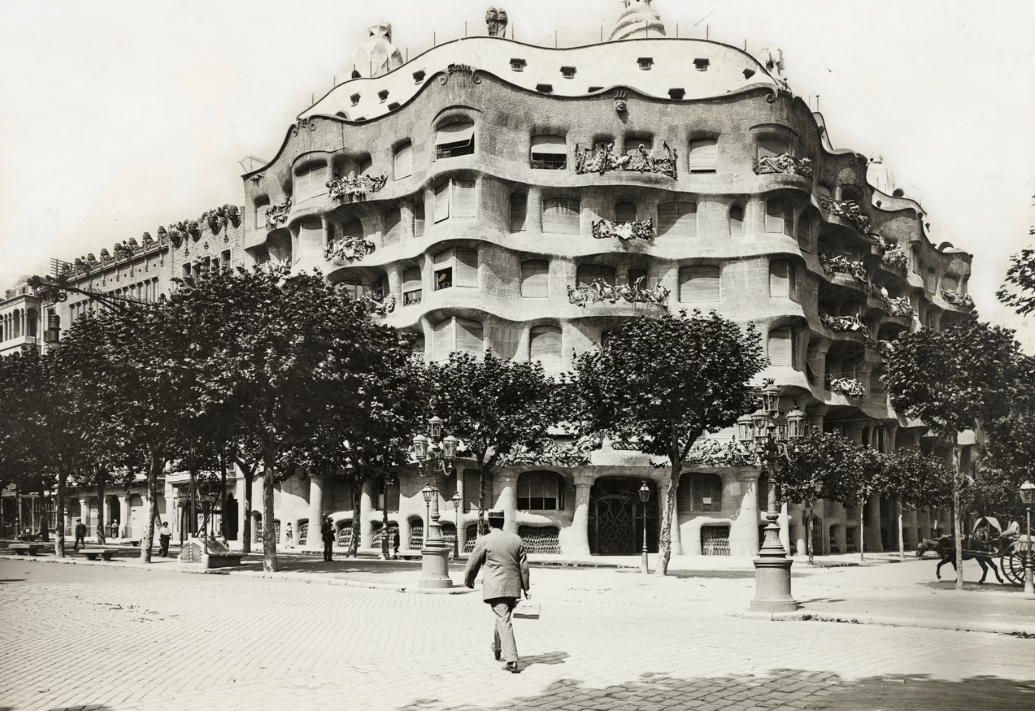
However, the dominant influence in defining Barcelona’s aesthetics was architect Antoni Gaud. His buildings were highly individualistic, defying conventional modes of architecture and adopting a language of organic shapes, detailed decoration and symbolism drawn from nature and religious doctrine. His most famous projects, were not yet completed at the time of the earliest documentation of the city but already drew interest.
Specifically, the Sagrada Famlia presented itself as an awe-inspiring structure unlike anything encountered before. Its form defied conventions of building and signaled a distinct blend of technology and imagination, and it was this building that would eventually become recognized as an international icon. Along with buildings such as Casa Mil and Park Gell they embodied Catalán Modernism, a movement that shaped the aesthetic identity of Barcelona at the close of the nineteenth and early twentieth century.
Everyday Life in a Growing Modern City
But Barcelona has never only been an architecturally interesting and developing economy; its street life and urban culture has always formed part of its essence. The initial visitors mentioned a very active, commercial and social street environment, with a focus on the many markets where fruits, vegetables and fish were daily provided and goods from all regions were traded. It was here where people met and talked: they were truly public and social places. One of the best known streets is surely the Rambla; here people, both from Barcelona and from other cities or countries, would go to meet their friends, take a walk or do some shopping and here you could witness the whole range of characters that inhabit Barcelona and get some impression of the city which both represented the local public and was a transit point. This is what I found out the most striking thing about Barcelona: the street life is even today a central component. Although it has developed into a big, modern metropolis, the link between public space and social interactions can still be experienced quite obviously.
Balancing Heritage and Modern Development
A fascinating element of Barcelona’s development has been the ability to combine preservation with development. Throughout the city’s growth and development into a modern industrial and urban center, a close attachment to historical architecture and cultural roots has always existed.
With its medieval and Roman roots, the Gothic quarter shows remnants of Roman, medieval and earlier modern architecture within its city walls. Narrow street ways, medieval churches and historical plazas mingle with newer developments forming a historic layering, or juxtaposition of the ages that can be seen all over the city.
However, Barcelona still continues to adopt modern architecture and urban planning. This juxtaposition of the old and new allow for the preservation of historical elements while meeting the needs of the modern day. It was understood even then, with the modern development taking place in Barcelona, that architectural sites should be protected at all costs, a need which exists still.
The coexistence of new architecture and old is a quality that is not present in many cities, and Barcelona possesses an exceptional ability to be modern yet retain its historical character, and allows one to see how history exists within daily life rather than just within the confines of museums.
Why Barcelona Continues to Captivate the World
Barcelona is famous across the world for many reasons. It is the mixture of culture, architecture, lifestyle and history that make it an attractive city. The city is located in the Mediterranean with beautiful coastal areas and a favorable climate, and it boasts of a cultural inheritance and history lasting through centuries. People are attracted to the city not just for its historical buildings and places, but also for its ambience and atmosphere. It is not only the artistic expression and historical richness but also its vivacity and modern spirit which attracts tourists to the city, allowing visitors to experience it on many levels- whether it’s visiting one of Gaud’s marvels, walking down historic alleys or trying out its culture and food. Its continued relevance is partly due to its ability to change and adapt without losing its essence and history. Unlike most cities, which tend to lose their character in their rush for rapid development, Barcelona successfully adapts and grows without eroding its existing structures.
Conclusion: A City Shaped by History and Reinvention
Barcelona is an island that has never stood still. Through all its various iterations from a medieval trading post through the industrial heart of the 19th century and the artistic and cultural hub of today, Barcelona has continuously reinvented itself without forsaking the identity of Catalonia.
When you look back at reports from the start of the 20th century, you can see a city that was already changing – the city was becoming modern yet it was so firmly rooted in its traditions. This juxtaposition is what defines Barcelona today. This is the city that is at once old and new, the city that is local and global, the city that is both modern and traditional.
Barcelona is one of the great cities of Europe. It stands as a shining example to all of us that progress doesn’t need to mean the abandonment of history, but can also mean the very celebration of it in an ever evolving urban environment.